• Skip to main content

Jo Squire Writes

Action Fiction Africa Female

  • Home
  • Jo Squire
  • All Books
  • Travel Blog

Uncategorized

Sea Otters and Salmon

February 14, 2019 by admin

The Alaskan fishermen would never tell you there’s an oversupply of salmon in their rivers, but there can be in their own freezers.

My friend Liz lives in Cordova, a gorgeous much rained-on fishing village on the Alaskan coast. It’s in the Prince William Sound, a stronghold for sea otters. No roads connect into this area, and when you arrive on the ferry, these cute furry sea mammals are the first wildlife you will spot. With coats so thick they bob on their backs when resting, they solemnly observe the world with whiskery faces. Along with salmon, they eat shellfish and crabs caught off the bottom of the ocean. These they bring to the surface, where they use their bellies as a plate to place their live food on.

Nature is tough on the otters and their prey. I once saw a poor crab turn slow circles on an otter’s belly as its claws were plucked off one by one. Each time the crab manoeuvred its fearsome front claws toward the otter’s face, the otter would disorientate it by rolling belly down then belly up again to give the crab a quick dunk into the ocean. For a moment, the crab free floated before a paw recaptured it and replaced it in a more suitable position for the meal to continue.

As the ferry navigates the last calm stretch of water into Cordova, otters swim out of its way. A few dive at the last moment below the cold shimmering surface. Further along, in a sheltered bay, groups of otters float on their backs to form rafts, paws resting across their chests.

It’s easy to pick out the visitors as they eagerly run from window to window while the ferry glides along the coastline into Cordova. We descend to the bottom deck and wait our turn to drive off the ferry. Once on land, Liz parks the car across from the floating raft community, and I’m able to see baby otters held close or balanced on their mothers’ chest. I could watch for ages, but it’s late, and we have a month’s supply of groceries to unpack. At my first opportunity, I’ll walk back down here to watch them some more.

The next morning as I rug up in warm clothing for my return to the shoreline, Liz is attempting to stash salmon from the seasons fishing run into her freezer. As well as the two boxes we’ve carried with us, there’s already a box in there, accidentally left by a long-gone crew member. It’s a challenge. As fast as she forces frozen salmon steaks into the freezer, others are pushed out. Crouched on the floor, a box of salmon at her side, she cusses as several pieces dislodge and rain down on her head all at once. I laugh because It reminds me of a scene in “The Mask “, where, after a night of cavorting on the town, Jim Carey is woken by cops at his front door. When he opens his clothes cupboard to dress, tall stacks of dollar notes fall, sending him into a panic while he tries to re-stash the money.

A few minutes later Liz picks up her mobile.

“Hey Stephanie, how would you like it if I sent some salmon over to you?”

Filed Under: Uncategorized

Travel Blog

January 20, 2019 by admin

Join the email list and follow my adventures

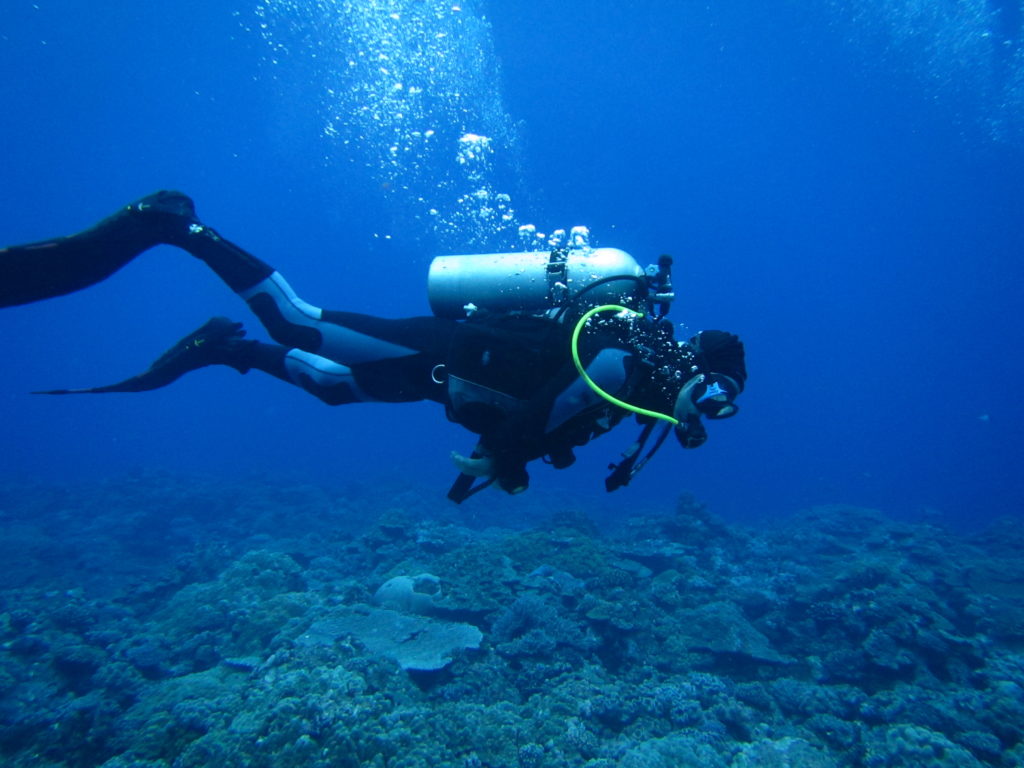
Filed Under: Diving, Hiking, Uncategorized

Thoughts and Environment

October 28, 2018 by admin

Let us recognise the soul in all sentient beings, and in doing so, honour our own.

Save the Elephants!

Theoretical Ecological Collapse: Any Excuse To Kill Elephants
by Jarad Kukura | Apr 1, 2020

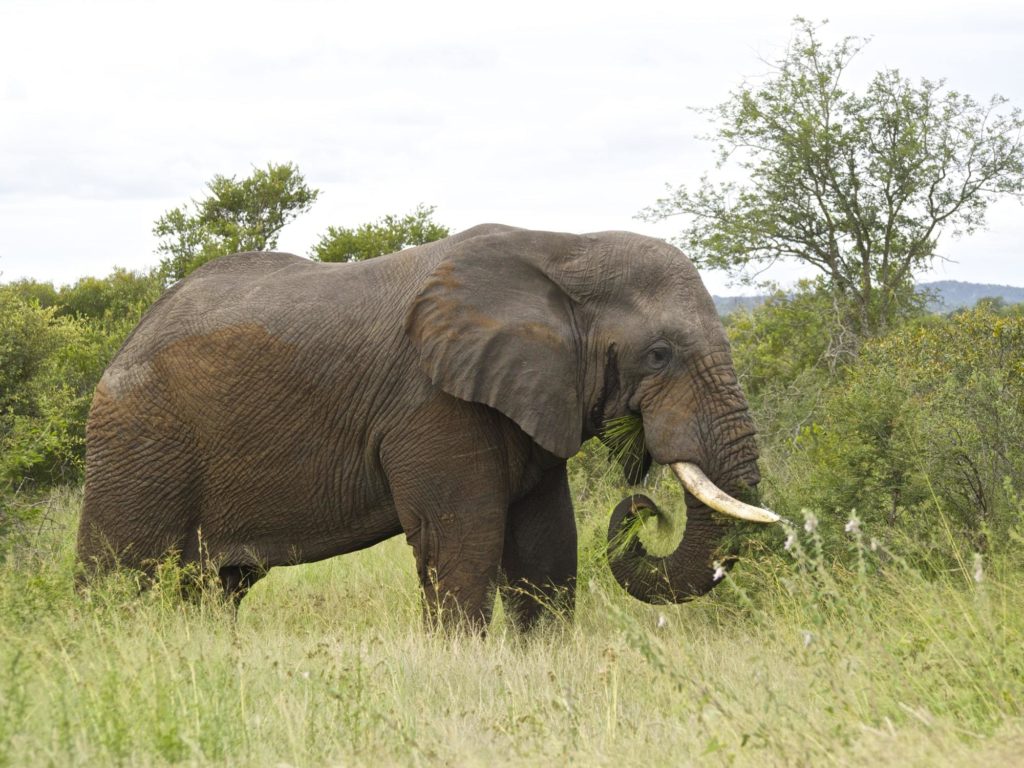
Feeling the pressure of the United Kingdom’s upcoming decision on a trophy hunting import ban, Botswana reiterated their unscientific opinion that the country has too many elephants. In their eyes, hunting is desperately needed to control the population of 130,000 elephants that far exceeds the country’s theoretical carrying capacity of 50,000.
The 50,000 number aligns with a density of 0.2 elephants per sq. km that was derived from an outdated study stating tree loss begins to occur at that elephant density. However, research into ecological benchmarking using historical data shows Botswana’s elephant populations are lower than expected given a scenario of limited poaching.
But elephants live in complex and dynamic environments. The idea carrying capacity can be accurately calculated in highly variable environments, even with the best intentions, is unfounded.
And many hunting advocates attempt to leverage this scientific uncertainty around elephant densities as justification for lethal population management. Hunting advocates invoke the precautionary principle, stating elephant numbers should be artificially reduced if they could irreversibly damage ecosystems and imperil other species. In other words, better to be safe than sorry.
The precautionary principle has a long history of being used to justify killing elephants in the absence of clear scientific evidence of environmental damage. But the precautionary principle also has a long history of failure when it comes to killing elephants to protect habitats and biodiversity.
Allan Savory admits his experiment of killing 40,000 elephants to prevent desertification in Zimbabwe was a complete failure. He calls this experiment “the saddest and greatest blunder” of his life. Similarly, Kruger National Park’s officials led a decades long culling program to limit elephant numbers under the guise of protecting large tree species. Again, this experiment failed to prove a clear relationship between elephant densities and dead trees.
Both culling experiments came about in the 1960s when wildlife management was still in its infancy. An argument can be made the mistakes can be forgiven because scientific data was at a premium and the understanding of population dynamics in conservation was still progressing.
But modern research confirms what past management decisions demonstrated, there is no ecological reason to artificially reduce Botswana’s elephant. The cries of habitat destruction caused by elephants are unfounded. The habitat is changing because of ungulate populations rebounding from the rinderpest epidemic at the turn of the 20th century.
However, not managing elephant populations makes many people uncomfortable. If lethal population management is off the table, does that mean non-lethal techniques like translocations and contraception must be used? Those methods are often costly and come with their own issues.
Instead of asking how elephant populations should be managed, the question should be if elephant populations need to be managed. Typically, the answer to this question is “yes” because humans have intervened in the natural world by erecting fences and restricting resources. However, those anthropogenic interventions are forms of bottom-up regulation techniques that already limit elephant populations. Top-down techniques, lethal or not, are both redundant and unnatural.
Many African herbivores evolved larger sizes, in part, as a predator defense mechanism. Species larger than 150 kg have few natural predators and are bottom-up regulated in terms of population numbers. Species larger than 1,000 kg, like elephants, generally have no natural predators once they pass their juvenile stage and have populations regulated by the availability of resources. Essentially, restrict resources to restrict elephant populations.
Despite the propensity to classify humans as super predators, early Homo sapiens likely did not naturally regulate elephant populations. Archaeological evidence shows Middle Stone Age sites in Africa were devoid of elephants. Elephants, like most large herbivores, have a slow life history and would have been especially susceptible to extinction if humans naturally targeted them as a prey species.
Taking a hands-off approach to elephant management forces us to accept that we cannot control nature, something we have been fighting to accomplish for generations. But this laissez faire approach is not a novel idea when it comes to African wildlife.
Tony Sinclair was heavily criticized in the 1960s for allowing the Serengeti wildebeest population to balloon to previously unrecorded numbers. Biologists condemned Sinclair’s failure to implement lethal control over the wildebeest population and feared a complete ecological collapse was inevitable.
Sinclair believed wildebeest numbers would eventually stabilize at an appropriate level given the amount of resources available. And he was right. His experiment showed wildebeest numbers were resource dependent and eventually stabilized. There was no ecological collapse in the Serengeti due to wildebeest overpopulation.
It is clear Botswana does not have too many elephants and hunting will not have any impact on preventing a theoretical ecological collapse. Yet, the country continues to promote their opinions as scientific facts. If the country wishes to base their opinions on experiments from the 1960s, perhaps they should consider the ones that were successful and not the ones that failed.

Filed Under: Thoughts, Uncategorized

  • « Go to Previous Page
  • Page 1
  • Page 2
  • Page 3
  • Page 4

Copyright © 2026 · Author Pro on Genesis Framework · WordPress · Log in