• Skip to main content

Jo Squire Writes

Action Fiction Africa Female

  • Home
  • Jo Squire
  • All Books
  • Travel Blog

Diving

Sharks @ Holmes Reef

July 17, 2021 by admin

Our divemaster, Caitlyn squeals with delight, as she comes up off the back platform.

“Oh my god! There are about fifteen sharks under the boat.”

Almost everyone on board is within earshot. Moments later, we’re frantically struggling back into our still-wet dive gear. As I’ve got a head start on Pete, I grab a mask and kneel on the small back platform with my head underwater to confirm what awaits us. 

Most of the sharks are swimming circles just above the sandy floor. In amongst them, are 4-5 whoppers, sleek plump grey silhouettes casually cruising back and forth.
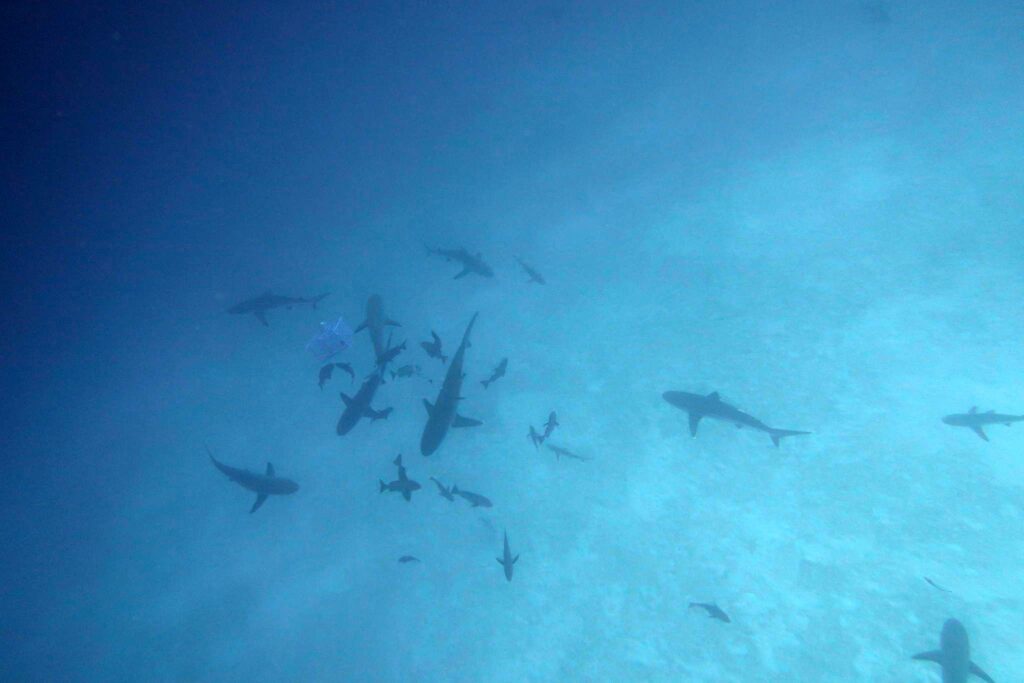
Photo by June Zhang

“What’s the verdict?” asks Pete when I return for my dive tank.

“Heaps of them!” I answer as I clip my buoyancy jacket into place.

“Don’t be in such a hurry,” he says. “They’ll still be there when you get in.”

“Not necessarily. They might get scared off.” I reply. Sadly, patience never was one of my virtues. I try not to look as if I’m in a rush as I lug my gear to the entry spot along the side of the boat.

“I’ll wait on the surface,” I shout as I drop the few feet off the boat into the water. Caitlyn is already a few metres below the surface. She hangs off a rope, her eyes glued to the sharks below. At 5 metres, I wait briefly for Pete, but Caitlyn has swum out over the sharks to find a safe spot on the sandy slope beyond. I follow her and we settle in to watch the sharks  
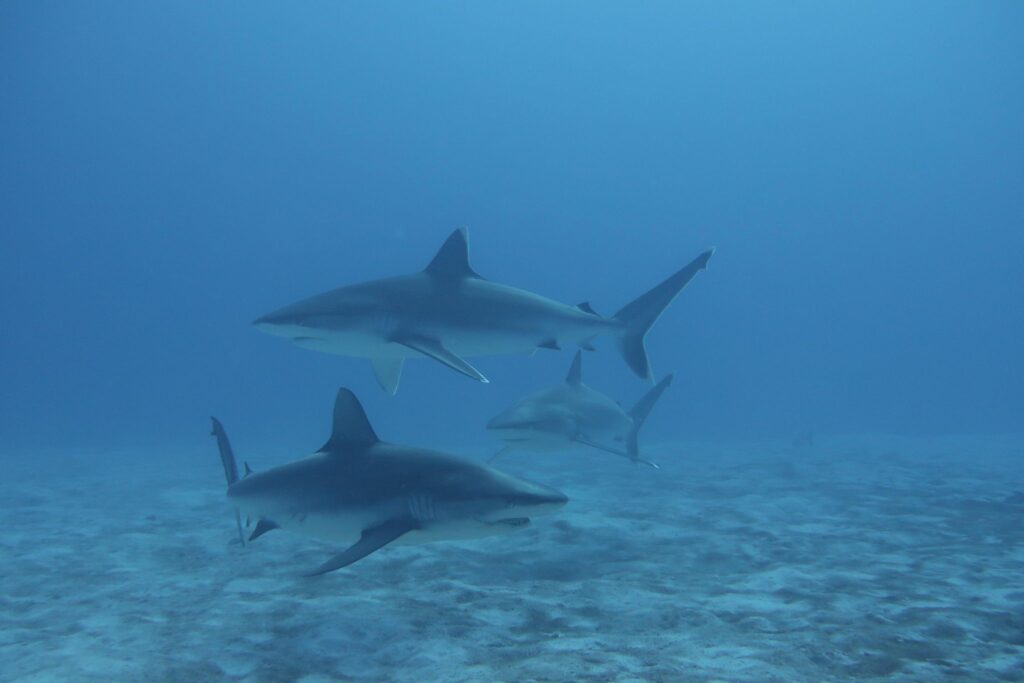
Photo by June Zhang

Some of the big sharks are bronze whalers, and the even larger ones are silver-tips, whose bulkiness suggests they’d mean business if they chose to. They’re far more intimidating than the usual reef sharks and are not afraid of enlarging their circuits over the sand to approach closer to us. Before long, the other divers have caught up and taken spots on the sand just behind us.
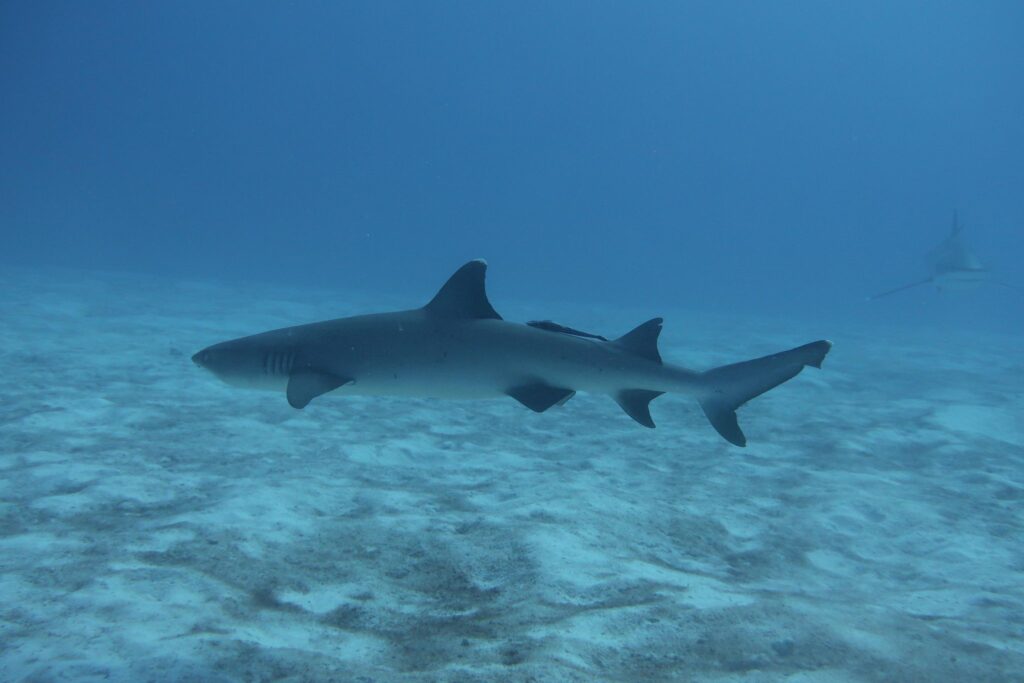
Photo by June Zhang

The last diver descends almost straight down into the crowd of sharks. He’s a new diver and seems unfazed by the associated danger. As he swims out of the fray, facing away from the sharks, his legs are pumping behind him. My thoughts go along the line of – I wouldn’t do that if I were you. Although most sharks are quite wussy and frightened by bubble-blowing divers, it’s sensible to face them and not take unnecessary risks.

I’ve barely finished my thought when a silvertip shark of which he’s blissfully aware approaches from behind. Caitlyn is the closest, and she launches herself forward, hurtling toward the shark with her fingers jabbing the water. Her don’t-mess-with-me attitude turns the 2.8 metre shark. At the last moment, it loops sideways away from both divers.
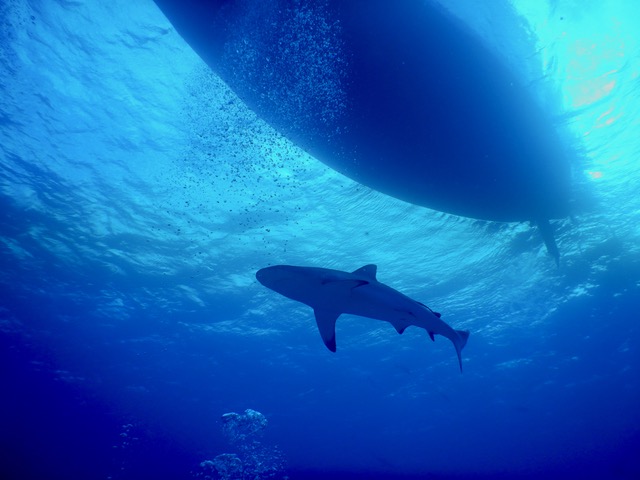
Photo by Jan Pope

I’m seriously impressed. It’s all very well for the macho boys to brag about their shark interactions, but to see Caitlyn go into battle to protect one of them is quite something else. When I tell Pete later that she will feature in my next blog for her bravery, his response is predictable.

“Oh, and am I in your blog for taking the responsibility of logging your details every last dive of this trip!”  
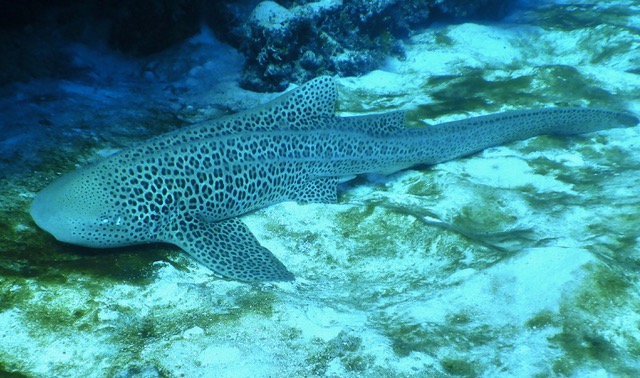
Photo by Jan Pope

Just so we’re able to label this as a designated shark location, we discover a leopard shark at rest on the sand toward the end of our dive. These beautiful sharks are always a treat. This one allowed us to approach closely before it gently lifted off and swam lazily away.
Filed Under: Diving, Uncategorized Tagged With: #environment # conservation #elephants #novel #author

The Little Things

April 18, 2021 by admin

We are all told it’s the little things in life that create meaning.  In theory, I’m aware of this truth, but it’s still taken me ages to entirely grasp the concept in all its reality.  Though, I appreciated it regarding the people closest to me and my lovely clients, I had difficulty applying it otherwise.

Underwater experiences can be just as elusive as those on terra firma. We hanker after whalesharks, mantas and rays, and maybe even a marine mammal colony when exploring in cooler waters.  Far too many hours are wasted trying to get a thrilling glimpse of marine life that often hurtles by so fast the experience is quickly over. If the sensational creatures aren’t around, we go for numbers and chase after vast shoals of fish and bait balls.  Meanwhile, we blithely swim over the top of a multitude of treasures, oblivious to their beauty.

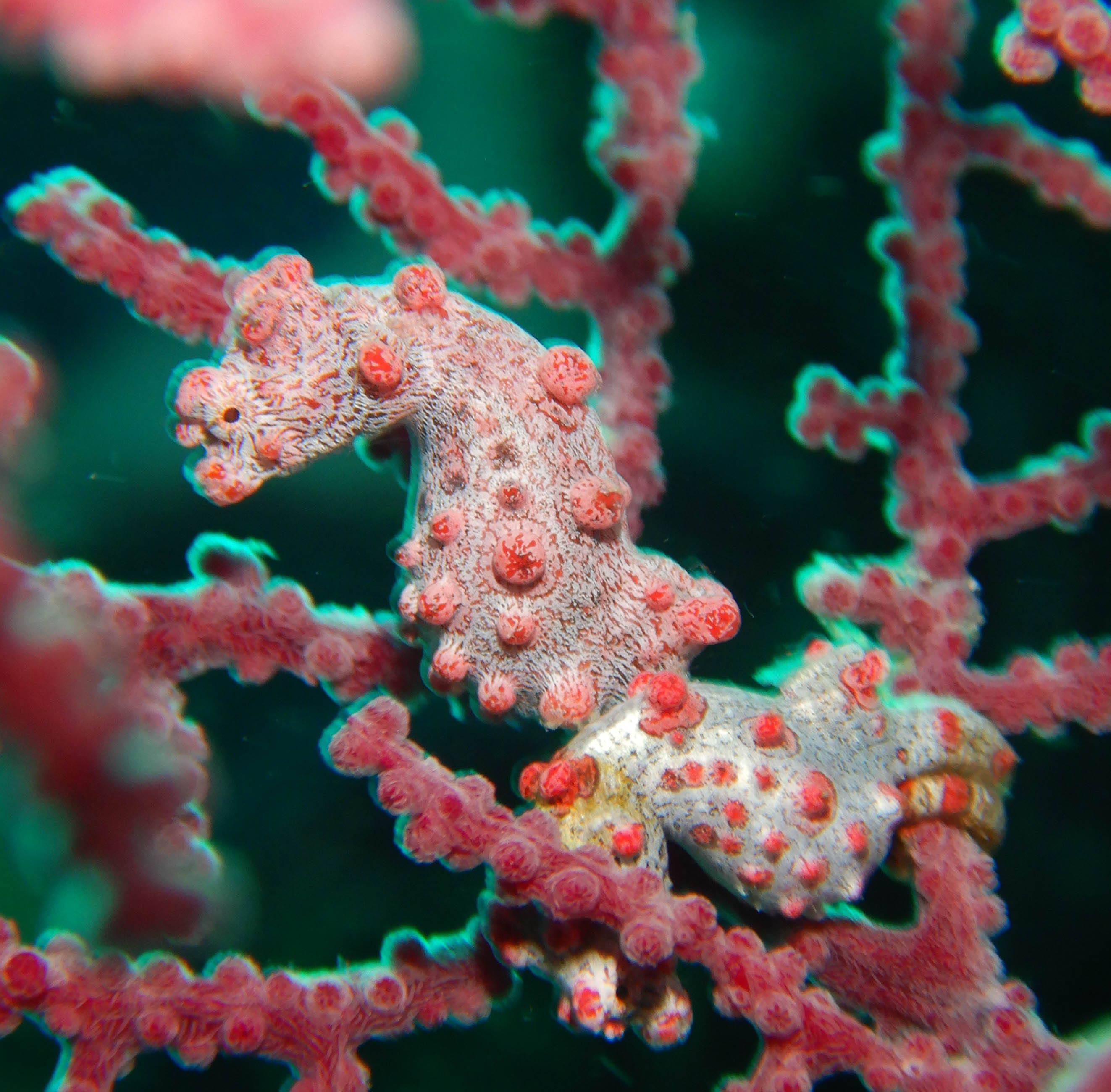
When always on the hunt for the dramatic, it’s easy to be disappointed. I’ve always enjoyed the underwater critters. Let’s face it, who wouldn’t be ecstatic to see a pigmy seahorse. However, I failed to focus on the finer details.

My friends and I were hard to satisfy, and no matter how amazing our trips were, we were always planning the next bigger, better one. We agonised over how the other group of divers saw things we seemed to have missed. If we’d only swam that way, done this, tried that. Why weren’t we faced in the right direction during the 2-second window when the dolphin swam by? This missing-out mindset was before I discovered we all live in our own slightly warped realities with our frequent exaggerations and different mental viewpoints!

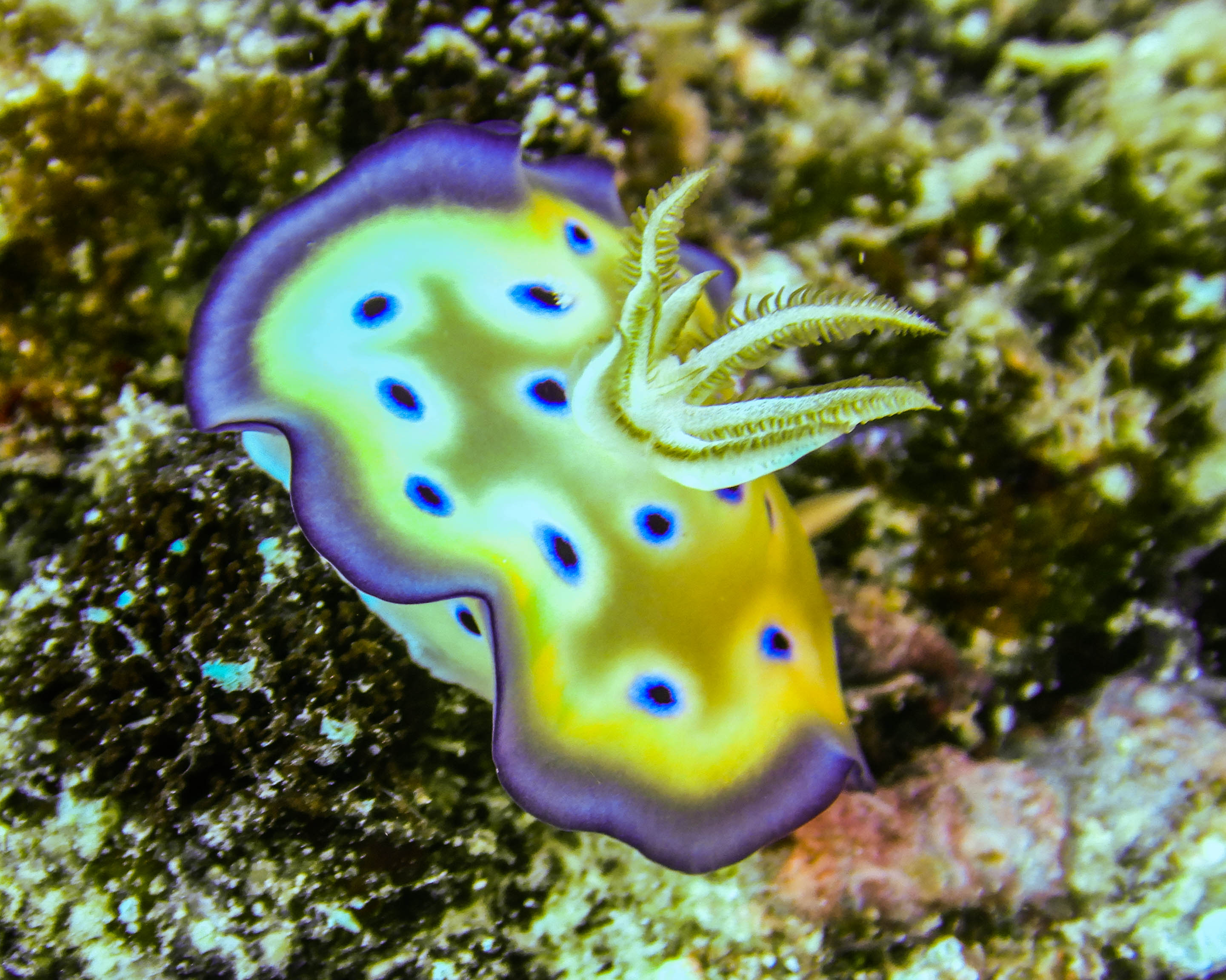
As I got older (please not me), my previously good eyesight lost its edge. About the same time, I noticed that one of my girlfriends had stopped bragging about not needing to wear glasses to read.  The upshot was that the small critters – the ghost pipefish, the tiny blennies, nudibranchs, and other midget versions of life grew gradually fuzzier. As everything is slightly magnified underwater, it took me longer to notice as the scenery blurred and the submarine world seemed to lose some of its beauty. My mood deteriorated somewhat as I downgraded the natural world from sublime and surreal to merely scenic!

I finally weakened and admitted it was time to buy a bifocal mask. On my next scuba dive club trip to Papua New Guinea, my headspace improved significantly. It was hard to believe how much little stuff I’d missed, and not only due to my altering eyesight, though I suddenly wondered if it had perhaps never been great for the close-up critters. I had previously overlooked the finer detail because of my lack of mental focus, and could have realised that my eyes needed help even earlier. I appreciated the macroscopic life like never before and understood what I’d previously passed over. My appreciation of each minute miracle went through the roof.

Filed Under: Diving, Uncategorized Tagged With: #environment # conservation #elephants #novel #author

Rum Runner @ Bougainville Reef

January 30, 2021 by admin

For 16 hours overnight, the Rum Runner has chugged Northward up the coast from Cairns. As always, her skipper works around the Coral Sea’s changeable winds and currents with ease, and Richard has again positioned his boat for another great dive. A few of us were surprised our trip went ahead, considering the edge of a cyclone has only just passed over this stretch of the Great Barrier Reef. However, the water is already crystal clear as we jump from the deck and sink below the Rum Runner.

Pete and I descend gradually toward where the ocean floor meets the bottom of Bougainville Reef 30M below the surface. On such days, when clear visibility extends both ways along spectacular coral walls inhabited by shoals of fish, the experience is almost impossible to match. Brightly-patterned fish dart between corals shaped like stag-horns, plates, and curled wood shavings. Further out are the heavier cautious reef giants, including a school of hump-headed parrotfish.

We fin up-current and reach a point where its strength forces us to hang onto the wall to avoid being swept backward. There are seven large Napoleon wrasses up ahead, more than I’ve ever seen in one place. They hang effortlessly in the current along with a group of white-tipped reef sharks that peel off the slip-stream current and glide curiously past us like friendly pet dogs.

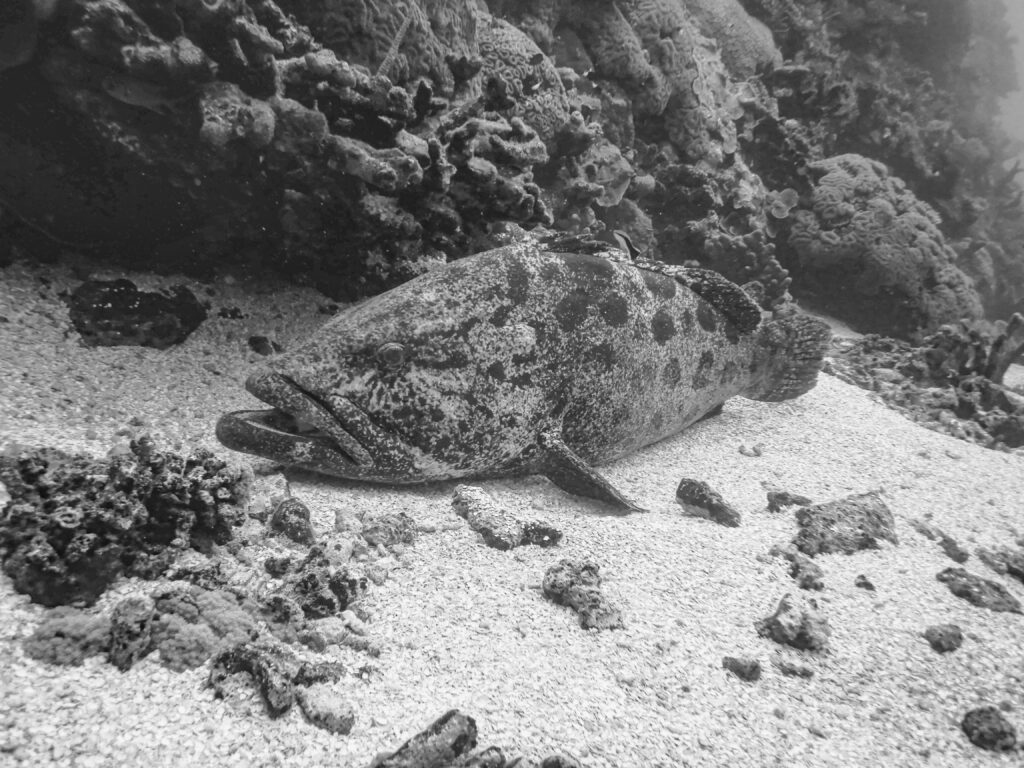
I’m so captivated by my view of the giant wrasses in the current that Pete has to tug on my fin to draw my attention to a massive potato cod. She’s resting on the sand further out on the bottom of the channel. Thrilled, we make animated hand gestures at each other and descend as if parachuting. Careful not to disturb her, I approach from the side. The grouper is unbelievably tame and allows me to swim past her tail and position myself for a photo.

When our dwindling air supply forces us up toward our safety stop, we let the current take us and drift past schools of spotted trevally and blue fusiliers. If only there were more time to take in all the life around us and enjoy the way the ethereal light shafts down from the surface across the surreal underwater scenery.

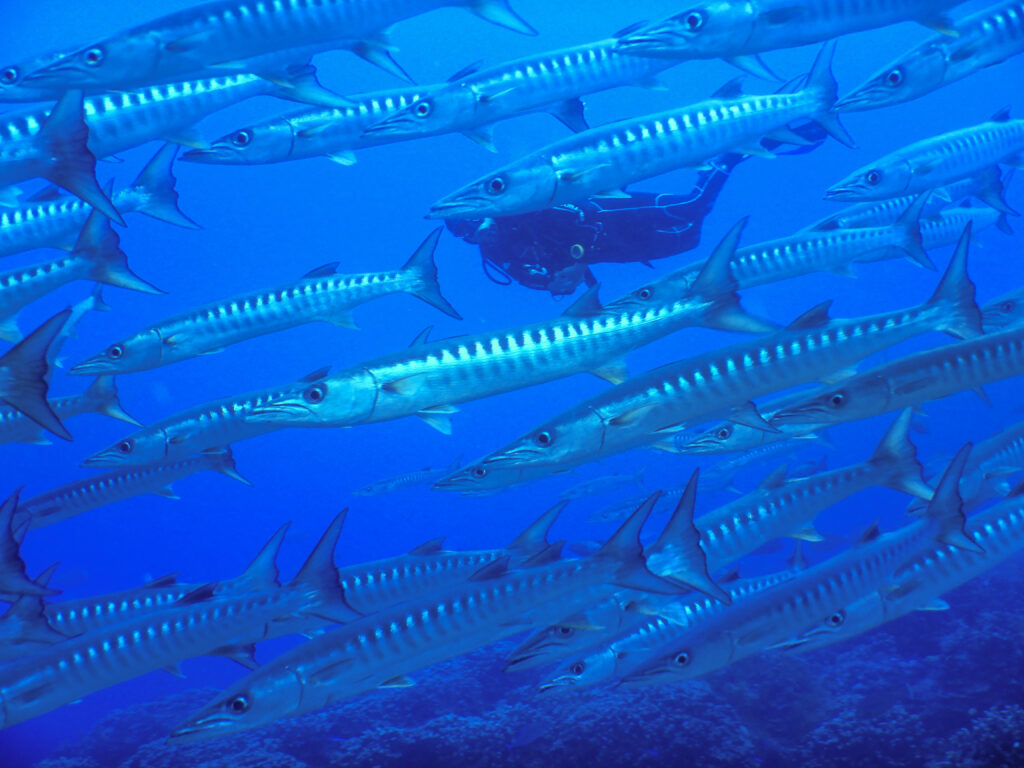
After an hour out of the water to de-gas, we’re eager to return. This time we head straight toward the area of slip-stream current where the big fish like to hang out. Our reward is a wide cylinder of striped barracuda. We hold our breath to avoid creating bubbles and swim below and then up into the centre of the swirl so that the barracuda’s stretched silvery forms are all around us.

Later as we munch hungrily on a spread of salads and delicious lasagne with the other divers, a glassed-out ocean encircles us, the view not at all what we’d expected after a cyclone. I guess Richard knew best after all.

Filed Under: Diving, Uncategorized Tagged With: #environment # conservation #elephants #novel #author

Goabadubadu, PNG

January 2, 2021 by admin

Google calls this island Badubadu, but I guess the local people know its unabridged name. There’s a manta cleaning station about 50M off the shore of Goabadubadu, which sits in 10M of water.

After a slow chug through the heavy swell of Milne Bay, we arrive around 6.30 am on a misty morning. The grey sky meets the grey ocean with only whitecaps to break the monotony. Despite this, we are eternal optimists and gear up in the rain, enthusiastic about a possible glimpse of frequently elusive manta rays.

“Mantas like weather like this,” my dive buddy Pete chirps up cheerfully, “They always come out in the rain.”

“Sure,” I reply. “I’ve waited enough times for mantas to show up on Manta Dives to know all about that!”

After half a night with our dive boat punching through the waves, I’ve not slept well, and the 2 cups of coffee have not yet kicked in.

Even so, I encourage my tardy buddy to hurry. 

“I’ll wait for you down there!” I shout as I jump in ahead of him and sink below the turbulent surface layers.

Part of me lives in eternal hope, and I’m keen to see a few mantas glide by like sci-fi spacecraft. Actually, on previous dives, I’ve not been entirely deprived and have swum with mantas swirling around me the entire time. They’ve flown past in formation, doing loop-the-loops, and come so low over my head that I’ve ducked despite my appreciation of how incredibly aware they are and knowing that they would not hit me.

The moment I start to sink deeper into calmer water, I relax, always grateful for the experience: the cocoon of water, the sound of my breaths, and an ocean full of life to discover. Mantas or no mantas, there’s always plenty to see, even on the flattest desert-like parts of the ocean floor.

This floor today is sandy, with an occasional coral bommie and an accompanying collection of fish. We make our way across the sand toward the manta cleaning station, with a short stop to watch the tiniest mantis shrimp I’ve ever seen.   At least I’ve seen something with a manta in its name, I think, already prepared for, needless to say, the failure of the real ones to turn up. We hang around the manta cleaning bommie for a while, but none are keen for a de-parasite session, and the cleaner fish focus their efforts on the less spectacular fish.

The highlight of the dive is the most beautiful flounder, beautifully camouflaged against the coarse sand. On its back are three face-like circles, complete with chocolate eye dots and pale nose swirls. As we examine the flatfish, it lifts its head slightly off the sand, ready to flee, its eyes raised within a darker patch of skin, swivelling to ascertain the danger. It edges away on multiple tiny fingers. We back off, not wanting to create further disturbance and leave it to its watery domain. 

Filed Under: Diving, Uncategorized Tagged With: #environment # conservation #elephants #novel #author

PNG Remote Church

February 16, 2020 by admin

As the MV Chertan pulls up at the Kwato Island jetty, a group of curious kids jostle for the best view of our back deck. The deck contains rows of wetsuits and tanks, an underwater camera table, and ten divers from the Nautilus Scuba Club whose chatter is noisier than that of the kids.

The open, innocent faces of the curly mopped kids watch our every movement. Later they dive-bomb off the jetty, a favourite activity for children in remote PNG coastal communities.

After our first critter filled dive, we tuck into yet another hearty breakfast. To occupy the surface interval between dives, my dive buddy and I take a walk through the small settlement toward the church. Our grassy track ascends between old jacarandas and giant fig trees to a high point overlooking the village. Along the way, we catch glimpses of a sunlit ocean through gaps in the canopy. A five-corner tree and the enormous figs remind me of the vegetation back home in tropical Queensland, but everything seems grander here. So many of our ancient trees have been quietly felled by local councils in Australia, one by one, the not so slow attrition of nature as we hurtle toward our cemented cityscapes. 

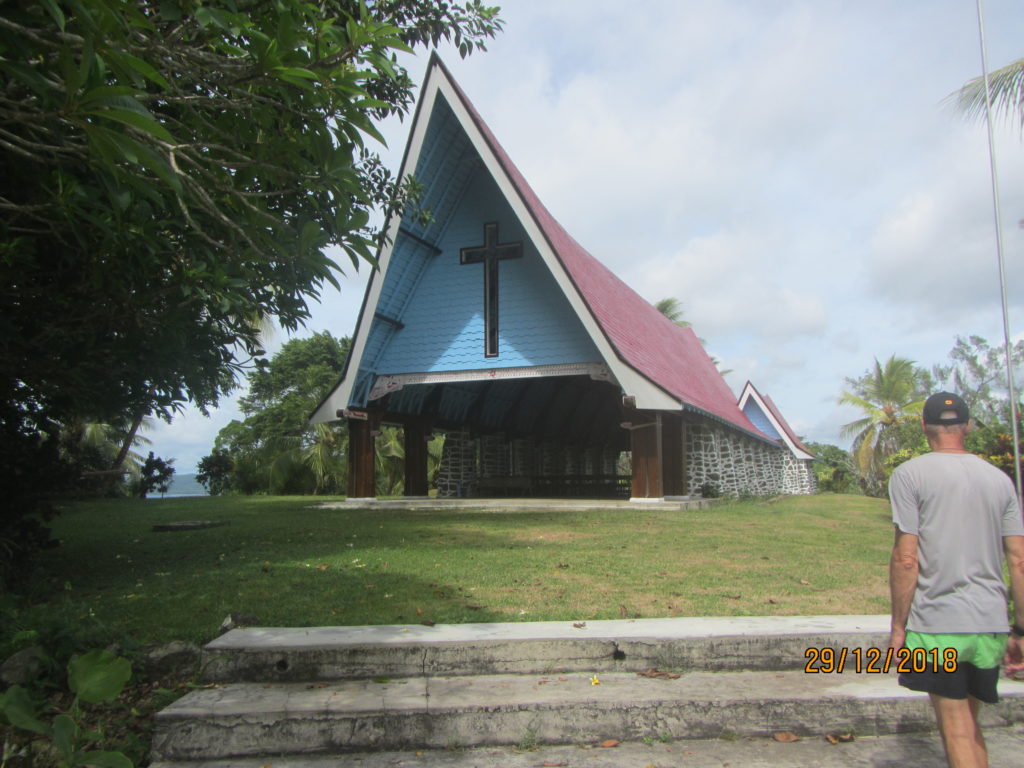
The A framed church looks modern, but the plaque says missionaries built it in 1941.

“They were keen to get this built during the war,” says Pete.

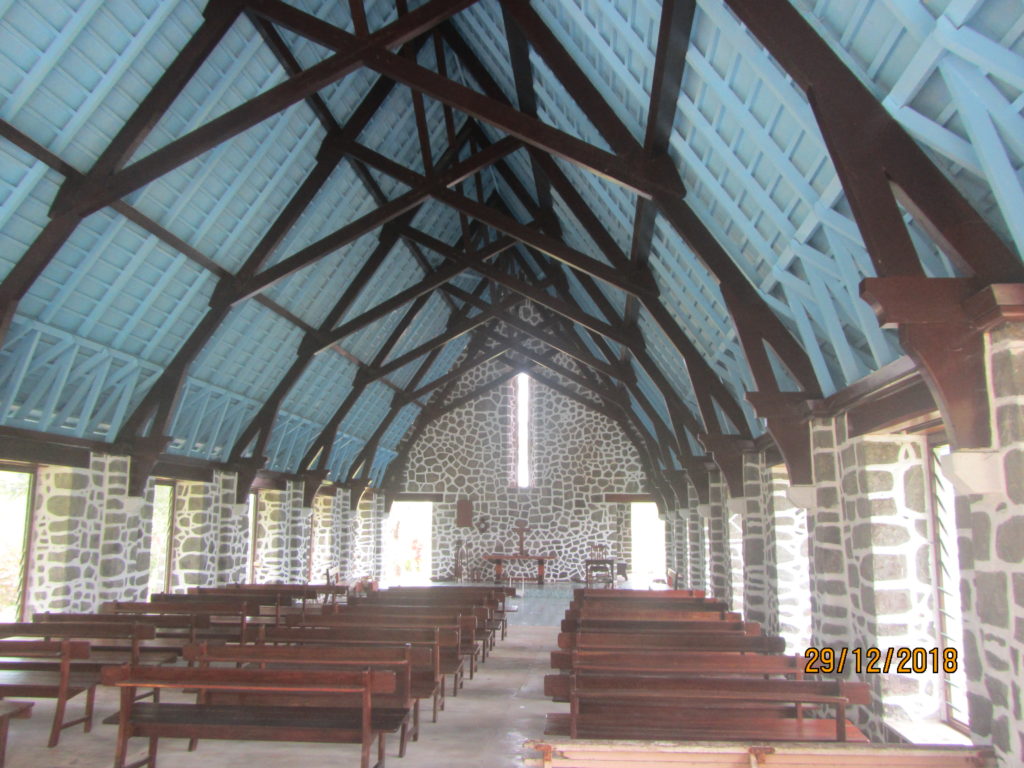
But they did, and it looks as new and polished as it probably was on the day they finished it. Sensibly, the sides are open and partly louvred so that the worshippers can gaze across expansive ocean views and luxuriant forest canopies — a reminder of the beauty laid out by God. Its high blue roof and hand-built stone walls seem at odds with the wooden thatch-roofed houses on the beachfront some way below us, but it’s gorgeous never-the-less.

When we return, the kids have relocated to seats on top of a world-war engine that’s half rusted-away by the waterfront. Old and overtaken by nature, it’s become part of the landscape. Two of the children hold paddles as if they plan to paddle their craft across the deep green ocean only metres away. I wonder if the kids ever swim down to the motor sitting on the seafloor by their jetty, only partly disguised by coral and sponges.

We do another incredible dive, this time under and along from the jetty: ornate ghost pipefish, stonefish, and my first toadfish. Also, a range of cute blennies – from tiny ones with their faces stuck out of holes to fat rockhoppers that munch seaweed off rocks. Naturally, we’re delighted. Akiko gives the dive two stars, her highest rating. Heaps of other stuff too, and so many critters we lose track. It would take all day to try and classify them all.

Filed Under: Diving, Uncategorized Tagged With: #environment #conservation #author #novel #elephants

Where is Fakarava Atoll?

June 9, 2019 by admin

Our research group splits today, one group to count birds on the atoll rim, and the other on an island within the lagoon. I’m in the latter group of lowlier researchers, who score the less exciting jobs. After a month of bird counts in the Tuamoto Islands of French Polynesia, our group is nicely zoned-out and not in a hurry. I’m in the habit of snorkelling between counts. The moment they’re done, I hit the water, where the visibility is fantastic. Today, I decide to snorkel alone ahead of my group across to the rainforest-clad island that’s reasonably close to where we’re anchored.

The sky is blue, and rays of light twist and turn through the water below me as I set off. Even through the crystal-clear water, I can’t begin to see the bottom. Swirling light beams vanish into deep black down there. For a while, I’m fine with this, but the swim is long enough for anxieties to surface. I begin to wonder about what might lurk in the depths. As a diver, who regularly sees sharks, I’m supposedly not so easily spooked. But it’s lonely out here and the dingy to bring my workmates across, still waits empty by the rusty boat that’s our temporary home. I tell myself not to be wimpy, a habit left-over from the days of my mother telling me not to be so stupid. And I continue, partly because I’m almost halfway across, so it’s now as risky to bail out as to continue to the island.

At last, a sandy slope emerges from the gloom below, and I’m less worried about being a target for a shark attack from below. At least I’ll be able to see danger now, unless it comes from behind as it usually does! In the shallower water, I slow and search for fish and turtles along the shoreline. It’s then I see fins twirling out toward the end of the island. My gut lurches and I swim quickly toward the shore, not splashing the water too much, to avoid unwanted attention.

My heart is pounding when I stop in 4 foot of water, and crouch under the surface to look out to where dangers lies. And I understand it’s all in my mind again. There’s a manta ray swimming loops out there as it filters plankton, its wings masquerading as shark fins. Now my chest is tight from excitement rather fear, as I push off from the bottom and swim hard toward the manta. It’s not alone!

For twenty minutes, I have 3 mantas all to myself as they swirl around in the shallows. I can hardly believe my luck. My colleagues arrive in the dingy and immediately flop over its edge into the water. They saw mantas from the surface on their way over. All thoughts of the bird count gone, we spend another surreal hour in the water while the mantas fly circles around us, so close we can almost touch them.

Filed Under: Diving, Uncategorized Tagged With: Tuamoto Polynesia Diving Manta rays sharks

  • Page 1
  • Page 2
  • Go to Next Page »

Copyright © 2026 · Author Pro on Genesis Framework · WordPress · Log in